
Georgia Southern × Ziplines Education: AI Workforce Campaign
The Challenge
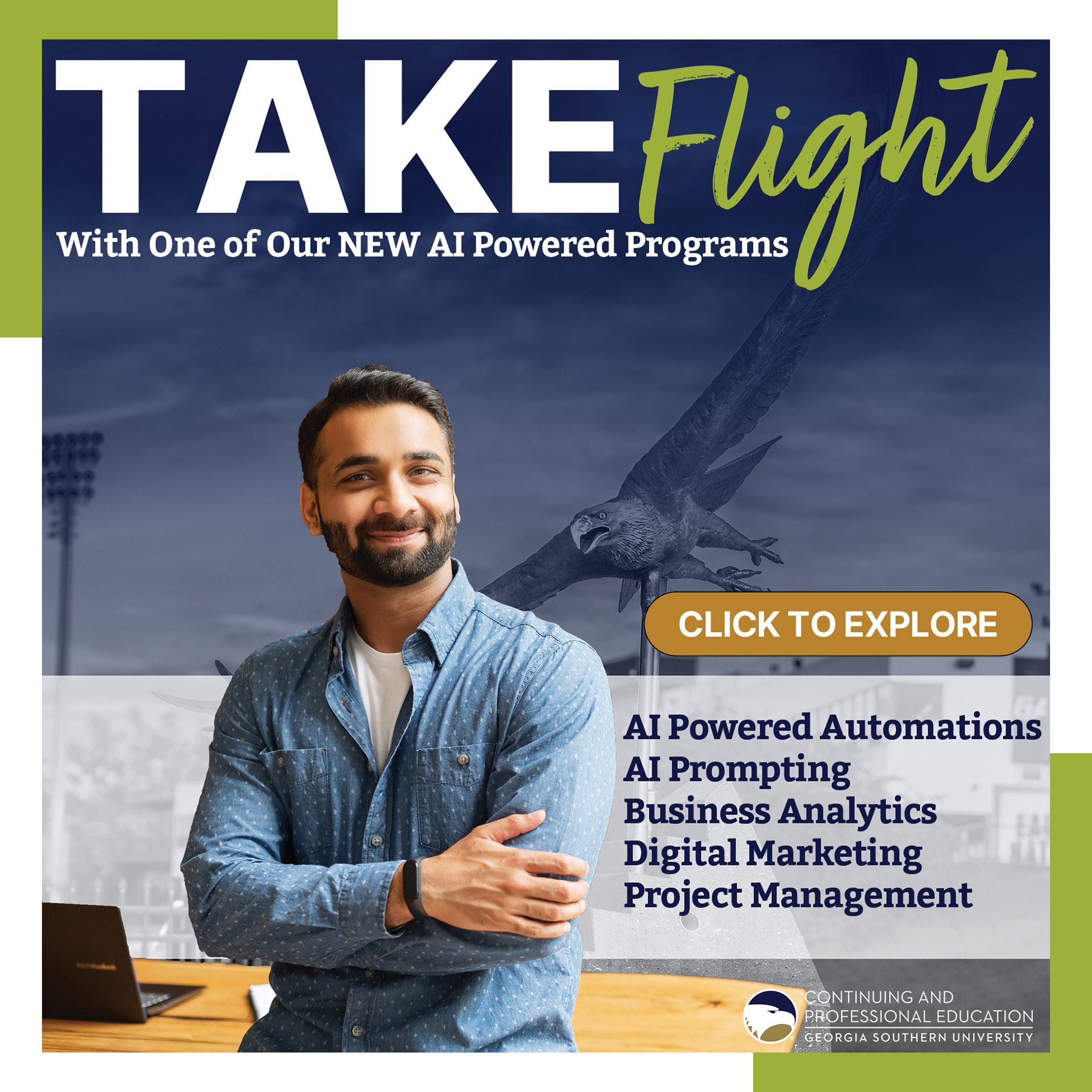
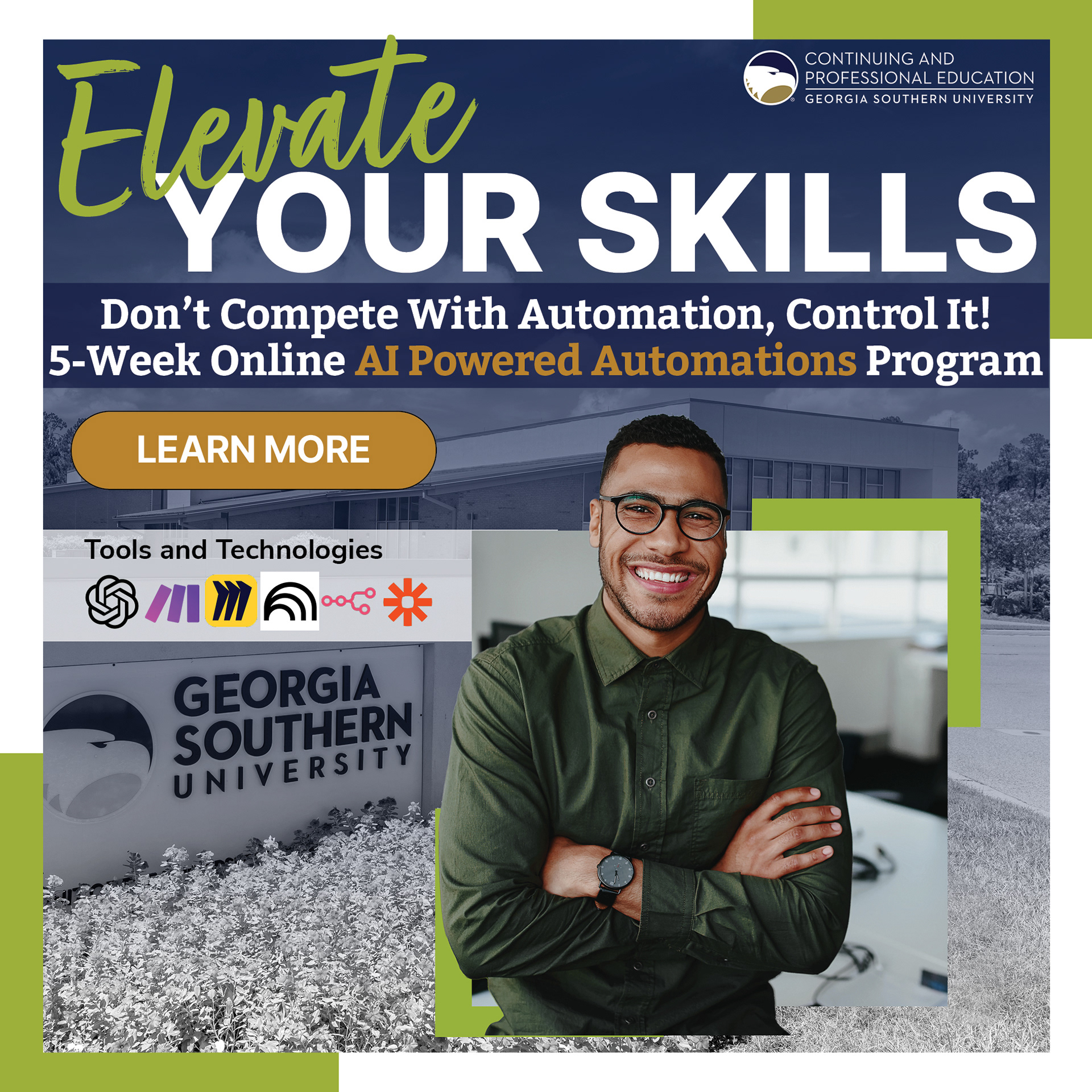
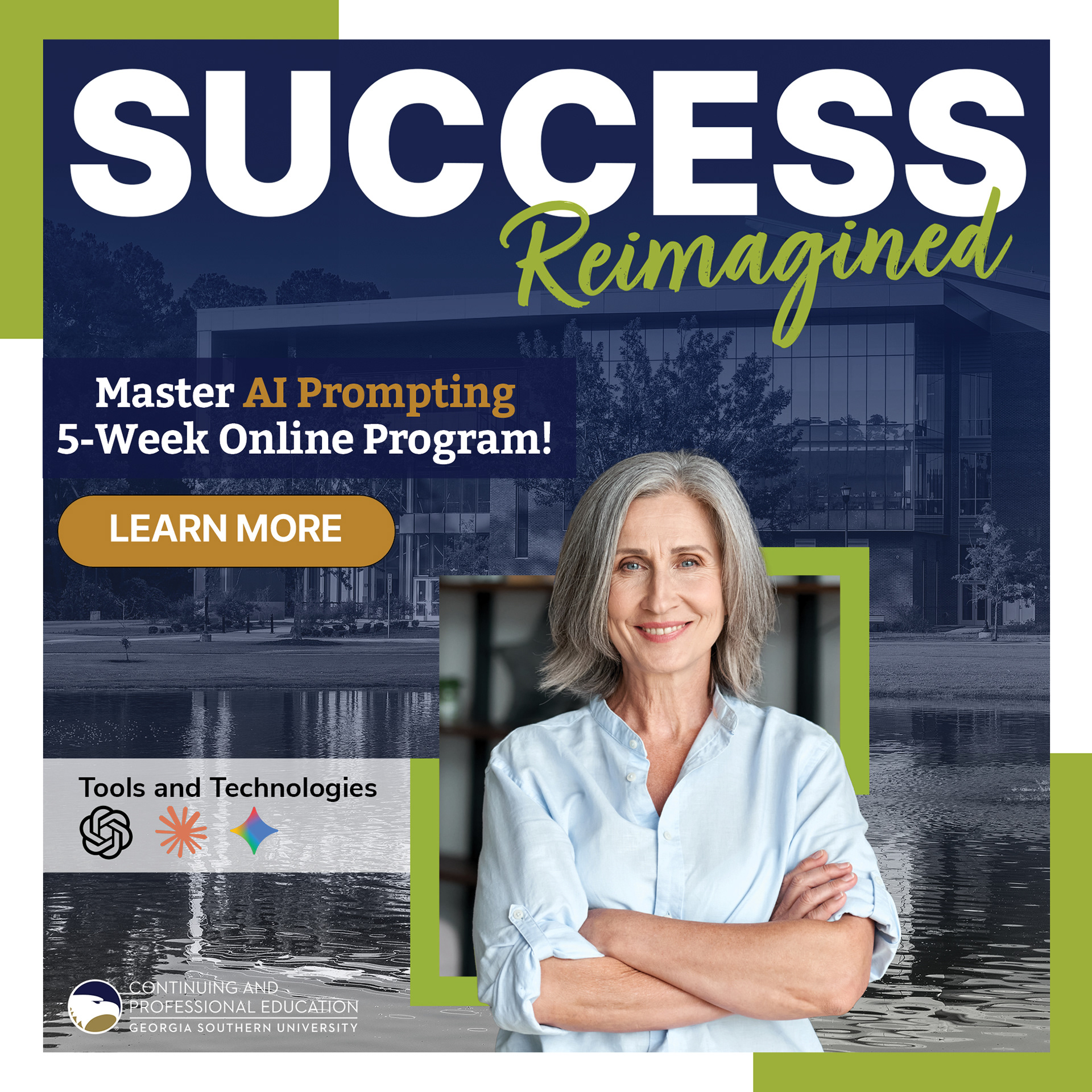
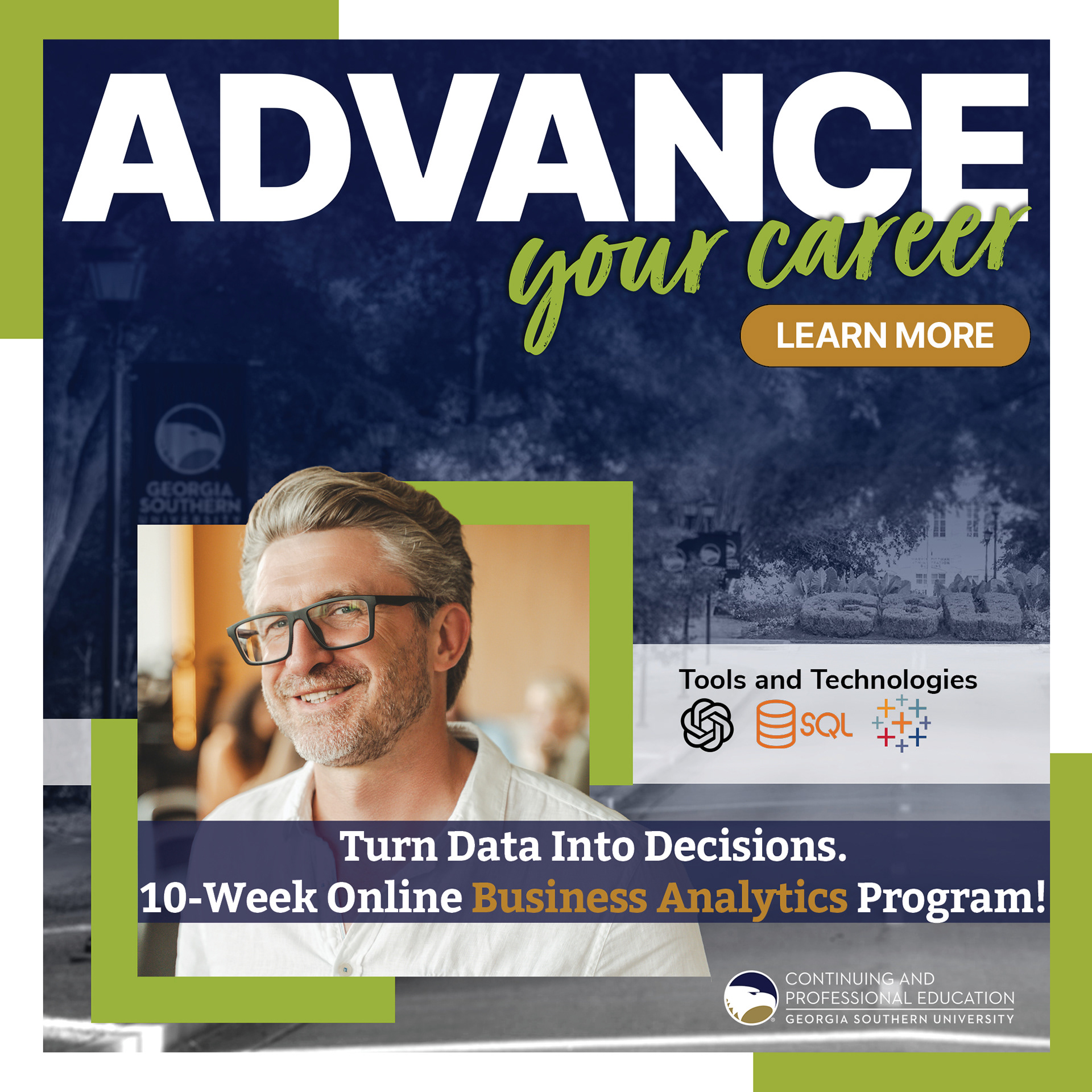
Georgia Southern University's Division of Continuing & Professional Education partnered with Ziplines Education to launch five new applied AI courses — covering automation, prompting, business analytics, digital marketing, and project management.
The challenge wasn't just "advertise five courses." It was:
The challenge wasn't just "advertise five courses." It was:
• Introduce a brand-new, unfamiliar product category (applied AI training) to a skeptical, time-strapped audience
• Position the university as a credible workforce development partner in a fast-moving, AI-driven job market
• Speak to multiple distinct audiences at once without diluting the message
• Do it across several channels with a cohesive, recognizable campaign identity
• Position the university as a credible workforce development partner in a fast-moving, AI-driven job market
• Speak to multiple distinct audiences at once without diluting the message
• Do it across several channels with a cohesive, recognizable campaign identity
The Insight
Before writing a single headline, I went deep on audience segmentation and demographic analysis to understand who I was actually talking to and why they'd hesitate.
Target segments identified:
• Mid-career professionals (30–55)
• Emerging professionals (22–34)
• Managers and executives
• Alumni seeking to stay competitive in their industries
• Emerging professionals (22–34)
• Managers and executives
• Alumni seeking to stay competitive in their industries
Shared pain points across segments:
• Fear of falling behind as AI adoption accelerates
• Uncertainty about how to actually use AI in their current role
• Pressure to boost productivity without taking on more work
• Uncertainty about how to actually use AI in their current role
• Pressure to boost productivity without taking on more work
Shared motivators:
• Career advancement
• Future-proofing job skills
• Increased efficiency
• Practical knowledge they could apply immediately
• Future-proofing job skills
• Increased efficiency
• Practical knowledge they could apply immediately
Findings:
People weren't afraid of AI itself, they were afraid of being left behind by it. That reframe became the foundation for everything that followed.

The Strategy
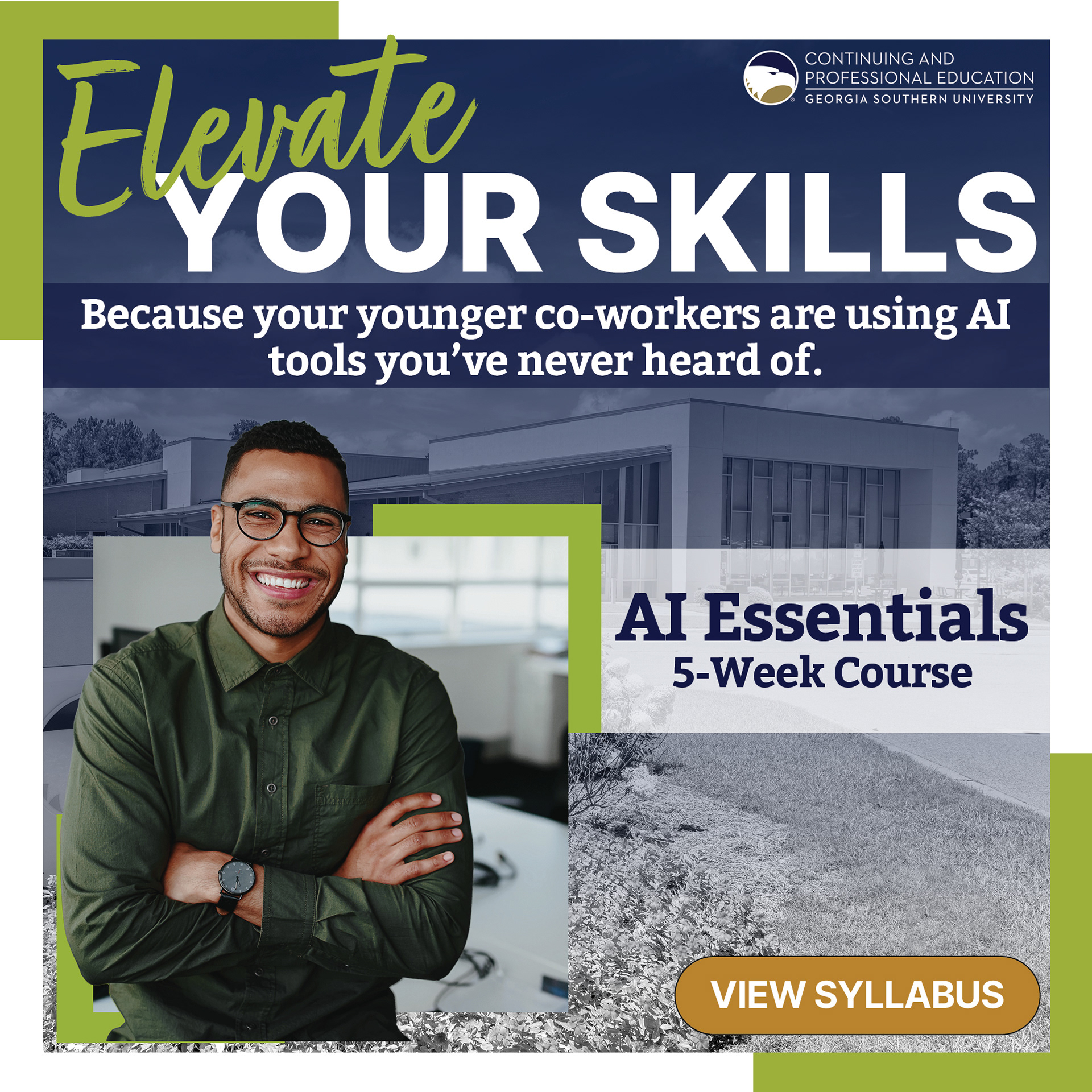
Rather than positioning AI as a threat to jobs, the campaign reframed it as a practical, human-centered tool:
• AI as a productivity enhancer, not a replacement for human work
• Messaging built around tangible outcomes: saving time, automating repetitive tasks, improving business processes, building confidence with new technology
• A consistent messaging framework across all five courses so each felt like part of one larger, credible initiative — not five disconnected offers
• Strong, benefit-driven headlines paired with action-oriented CTAs to move audiences from curiosity to registration
• Messaging built around tangible outcomes: saving time, automating repetitive tasks, improving business processes, building confidence with new technology
• A consistent messaging framework across all five courses so each felt like part of one larger, credible initiative — not five disconnected offers
• Strong, benefit-driven headlines paired with action-oriented CTAs to move audiences from curiosity to registration
This insight-to-strategy pivot
Moving from "AI will take your job" fear to an "AI will make you better at your job" mindset built confidence and is what unified the entire campaign across every segment and channel.
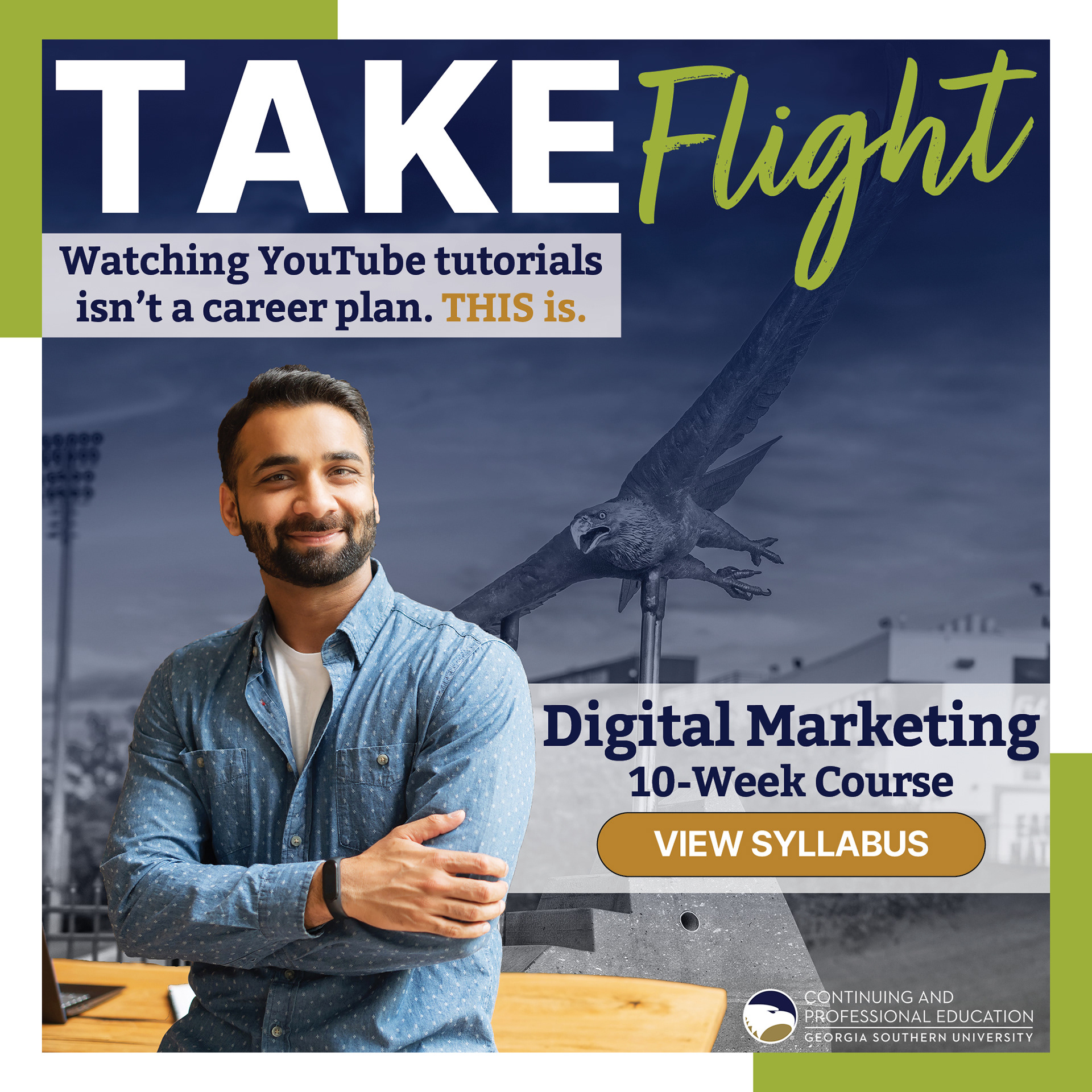

The Execution
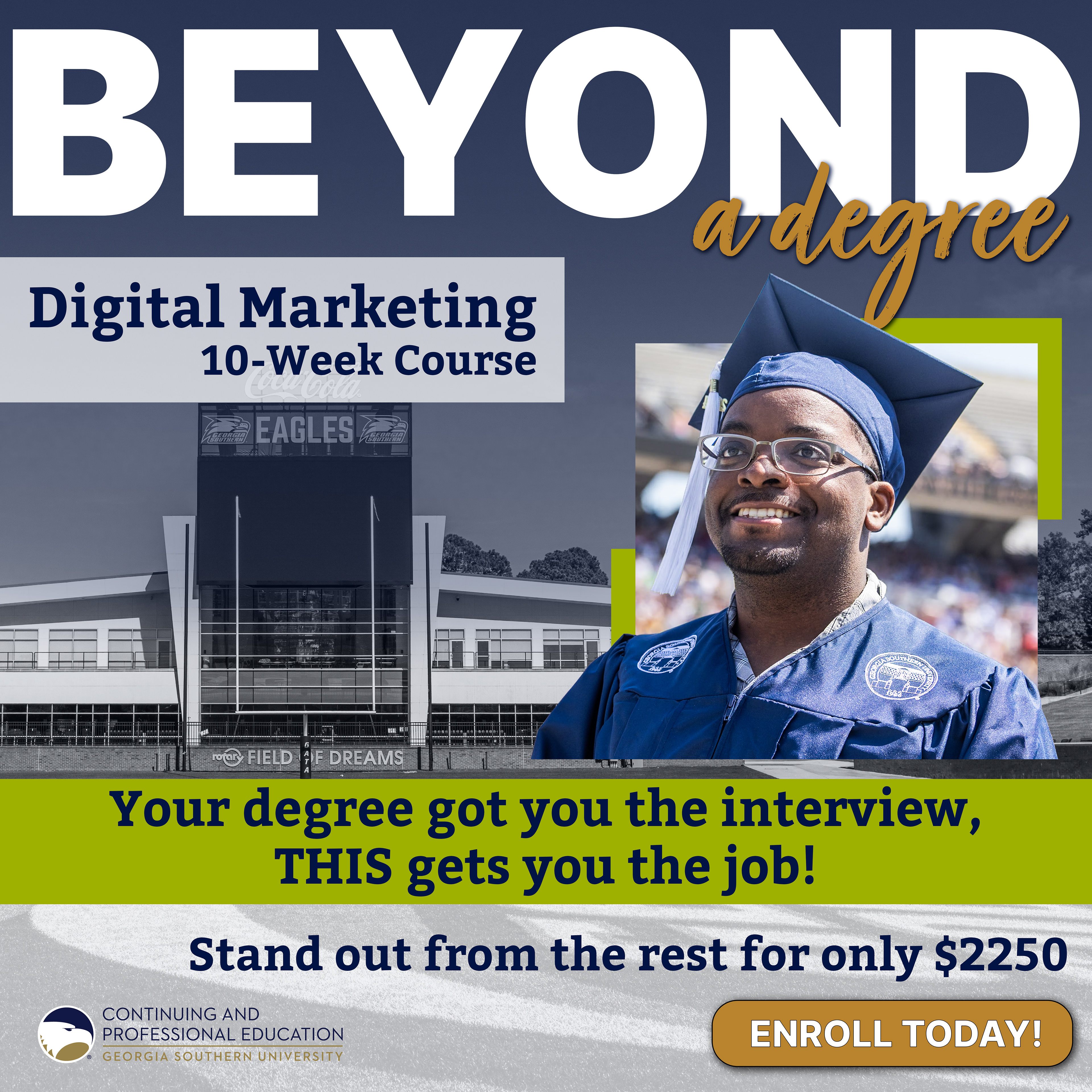
Platform-specific creative assets, built for how each audience actually consumes content:
• Facebook carousel ads
• LinkedIn sponsored content
• Alumni-targeted campaigns
• Awareness-focused graphics
• LinkedIn sponsored content
• Alumni-targeted campaigns
• Awareness-focused graphics
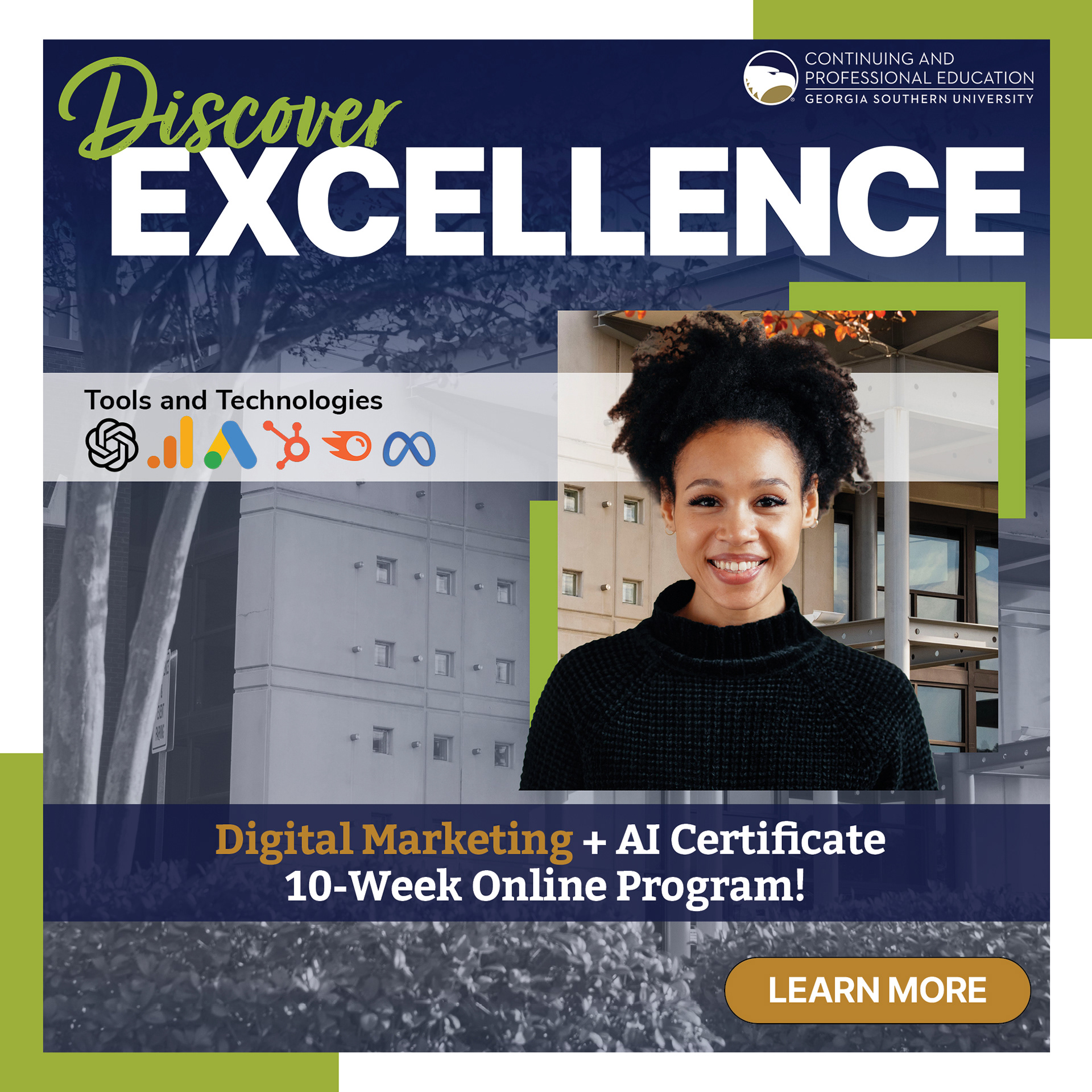
Each course was given its own individual value proposition while staying visually and tonally unified through consistent messaging, Georgia Southern branding throughout, and a distinct tertiary color palette to help the campaign stand out from other university content.
Phase Two: Data-Driven Optimization
Once the campaign launched, performance data showed AI Essentials (formerly AI Prompting) and Digital Marketing generating the strongest engagement — clicks, information requests, and registrations.
I used that signal to launch a focused A/B test on those two courses, targeting a specific friction point in the enrollment journey:
I used that signal to launch a focused A/B test on those two courses, targeting a specific friction point in the enrollment journey:
Version A
Approach: Standard registration path:
users submit name and email to receive course details/syllabus
users submit name and email to receive course details/syllabus
Goal: Capture leads early
Version B
Approach: Removes the barrier:
users go straight to a landing page to view the syllabus immediately
users go straight to a landing page to view the syllabus immediately
Goal: Reduce drop-off, improve conversion
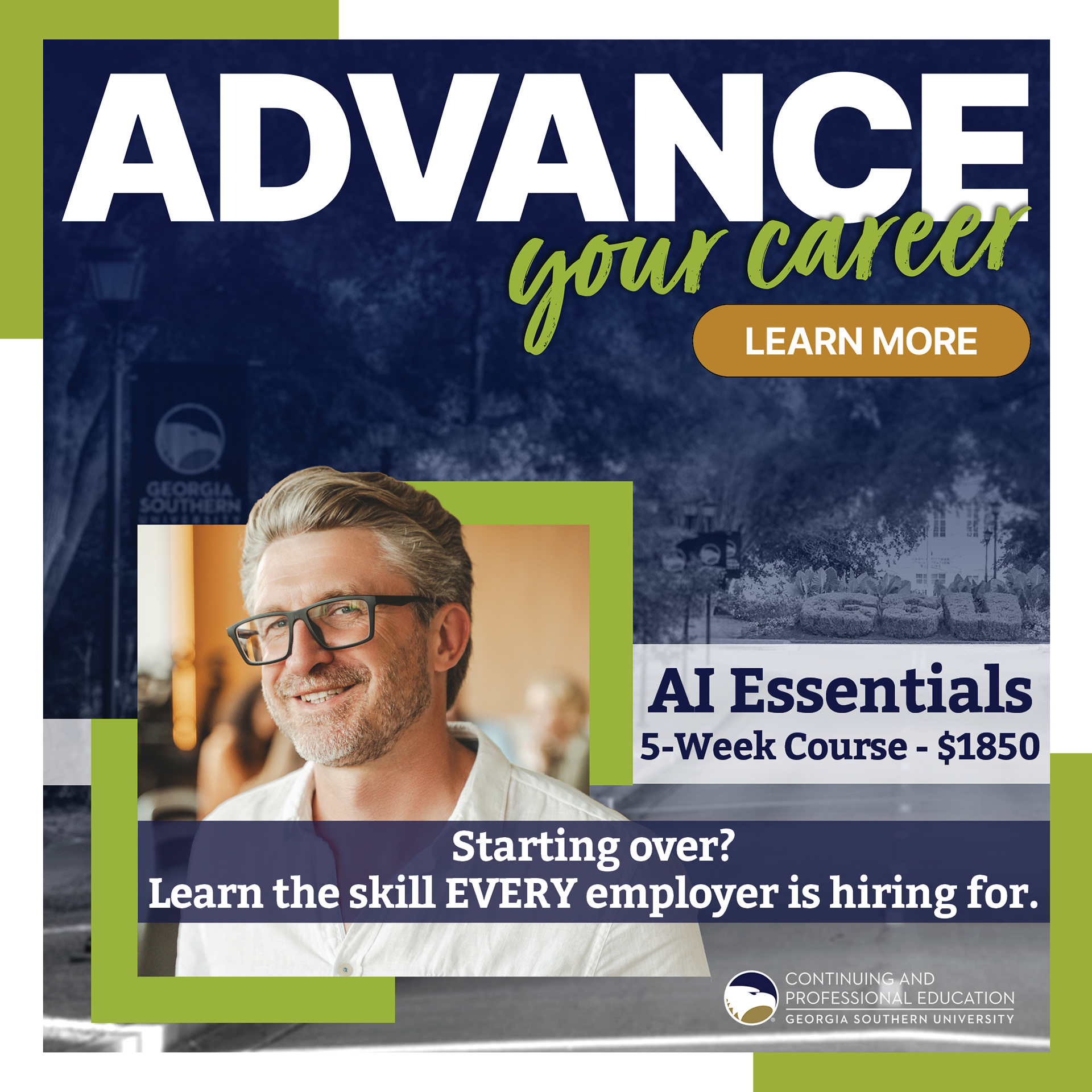
I also tested including course pricing directly in the ad creative, to set expectations earlier and filter out low-intent clicks before they ever reached the landing page.
This phase is ongoing; a steady, iterative optimization effort focused on reducing friction, improving lead quality, and increasing registrations through continued testing.
This phase is ongoing; a steady, iterative optimization effort focused on reducing friction, improving lead quality, and increasing registrations through continued testing.
The Takeaway
This campaign shows how I combine market research, audience psychology, and strategic messaging to launch new educational products in a way that aligns institutional goals with real workforce demand and how I keep refining that strategy with data after launch, not just at the start.